

If you run a business right now, you feel it. AI is everywhere. Automation promises are everywhere. And you’re asking yourself the same question every other business owner is asking: am I behind — or am I about to make an expensive mistake?
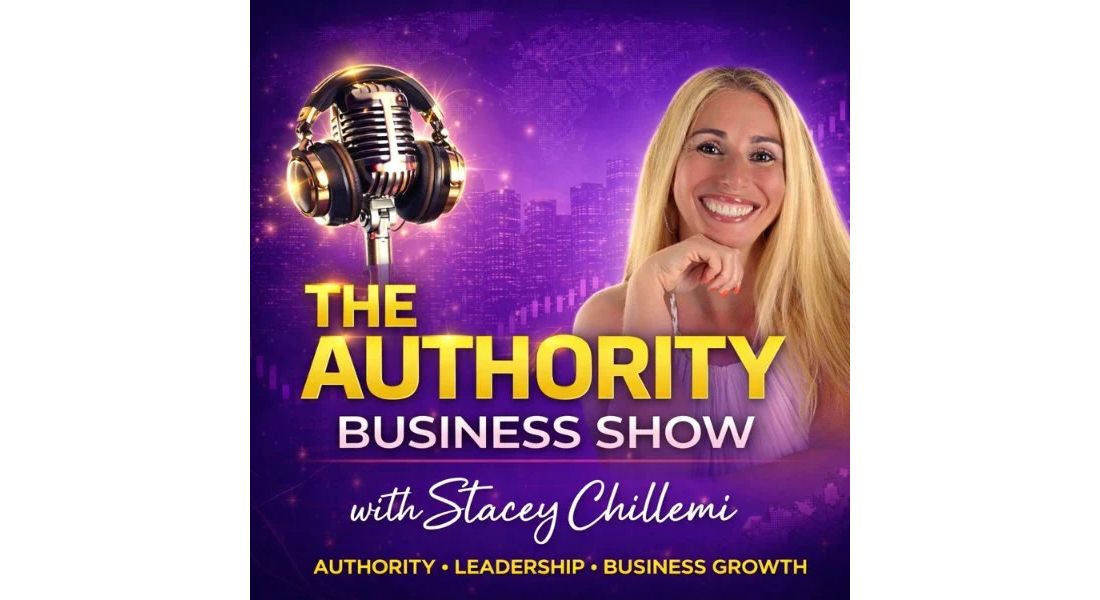
Our CEO, Akhil Verghese, recently sat down with Stacy on The Authority Business Show to answer exactly that question. The conversation covered the practical reality of AI automation for business owners — not the hype, not the theoretical possibilities, but the actual steps you should take this week if you want to use AI without losing control of what matters most.
Here are the key takeaways.
AI Is Making Businesses Faster — Not Necessarily Smarter (Yet)
One of the first distinctions Akhil draws is between speed and intelligence. Right now, most productive AI solutions in the real world are focused on automating existing workflows — doing what already works, but doing it faster and more consistently. Very few businesses are using AI to generate genuinely new ideas or creative strategies. That’s still firmly in the domain of human leadership.
This matters because it shapes how you should think about your first AI investment. You’re not buying a replacement for your best strategic thinker. You’re buying a way to handle the repetitive, high-volume work that’s eating up your team’s time.
Before You Automate Anything: Two Steps You Can’t Skip
Akhil’s number one piece of advice for any business owner considering AI is deceptively simple: before you automate, evaluate and structure.
Step 1: Define your metrics. Take the specific workflow you want to automate — say, responding to leads from Instagram ads — and look at how it’s performing right now. What’s your conversion rate? What’s your average response time? What does success actually look like in numbers? Without this baseline, you’ll never know whether your AI is helping or hurting.
Step 2: Label your data and settings. Go through everything the AI would need access to and clearly mark what’s sensitive, what requires human permission to change, and what can be fully automated. You don’t want an AI agent issuing $1,000 refunds to angry customers or using your business credit card without oversight. These boundaries need to be hard-coded, not left to the AI’s judgment.
The Real-World Math: When AI Lead Conversion Makes Sense
Here’s where the conversation gets specific — and directly relevant if you’re running a service business.
Akhil shares a concrete example from a cosmetology practice (think med spas, Botox, aesthetic services). When someone clicks an Instagram ad for Botox and an AI agent responds within 60 seconds instead of the typical 30 minutes to 2 hours, the results are dramatic. Studies show response rates can increase by 20x to 50x when contact happens within a minute. For a business like a med spa in a competitive market, where a potential client has 20 other options within a few minutes, that speed difference translates directly into booked appointments and revenue.
But here’s the nuance: the same approach applied to a real estate company produced very different results. Why? Because someone looking at a multi-million dollar property is willing to wait two hours for a response. Speed matters enormously for low-consideration, high-competition services. It matters much less when the purchase decision is inherently slow.
The takeaway for service businesses: If you’re in an industry where response time is the competitive battleground — home services, med spas, legal consultations, any appointment-driven business — AI lead conversion is likely your highest-ROI first automation. If you’re selling something where customers naturally take their time, look elsewhere first.
The Biggest Red Flag: Falling for a Cool Demo
Akhil is blunt about the most common mistake he sees: businesses falling for impressive demonstrations that bear no resemblance to production-ready solutions.
The problem is structural. It’s incredibly easy to get 85-90% of the way to a working AI solution. But in many business contexts, 85% accuracy is effectively useless — because if you’re correcting things one in ten times, you need to be just as vigilant as if you were doing everything manually. And the consequences of confidently wrong AI output are often worse than no output at all.
The gap between a cool demo and a reliable, deployable agent is typically tens of thousands of dollars and months of careful work. On day one, you look 80% of the way there. Then it takes five months to reach the 96% accuracy threshold you actually need for production.
What AI Can’t Replace: Agency, Creativity, and Accountability
The conversation turns to something many business owners quietly worry about: what can’t AI do?
Akhil’s answer is clear. AI is exceptional once you know what needs to be done. It makes the process of getting there dramatically more efficient. But figuring out what to do — the strategic vision, the creative spark, the leadership decisions — that’s still entirely human territory. He has never had an AI, even with significant autonomy, independently identify a problem worth solving that he wasn’t already working on.
And on the accountability front: no computer can be held accountable for its decisions. Someone in your organization needs to own the outcomes of any automated process, and Akhil recommends that person be the manager of whoever was doing the task before — they’re the most incentivized to get it right, and they’re already accountable for results in that area.
The Three-Step Rule for Adopting AI
For business owners who want a simple framework, Akhil offers three steps:
1. Talk to your employees. The best automation ideas almost always come from the people doing the work. They’re already using AI in ways that might surprise you. Listen to them, involve them in the process, and let ideas bubble up from the bottom.
2. Evaluate before you deploy. Define what success looks like. Understand the current workflow in detail. Identify every point where things could go wrong. Then decide whether to build internally or hire external expertise.
3. Set guardrails, monitor continuously. Every AI deployment needs hard limits on what it can access and do. And those limits need to be monitored — not just for a few days after launch, but permanently. If your conversion rate drops below a threshold for three consecutive days, you need an automatic alert.
What Should You Do This Week?
If you’re a business owner listening to all of this and feeling overwhelmed, Akhil’s advice is simple: start small, but start now.
The companies that have already adopted AI and worked through the early mistakes are now seeing real, measurable upside — real revenue increases from real agents deployed in real workflows. The gap between them and companies that haven’t started is widening. The biggest mistake you can make right now isn’t deploying AI badly. It’s keeping your workforce AI-illiterate.
Pick one simple, repeatable workflow. Define what success looks like. Set clear guardrails. Deploy it. Monitor it. Learn from it. Everything else will follow.
Watch the full interview at: https://www.youtube.com/watch?v=pwcSPE0Rwz8