
We begin by identifying priority conversations for your AI agents, whether in customer support or internal operations. We define strict agent policies and data boundaries, determining where a multi agent system is required to reduce failure modes and improve AI adoption. Our goal is to save time and improve satisfaction while building in security protocols from day one.

AI Agent Development Services
AI Agents That Run Real Work for Your Business
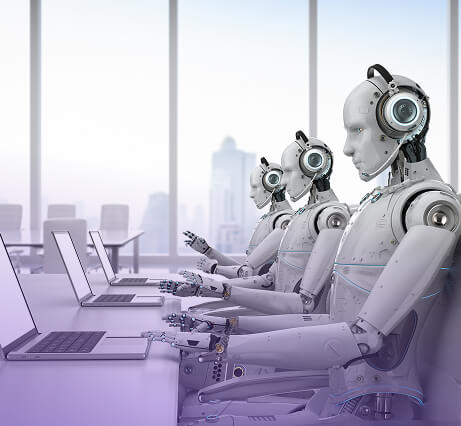
Krazimo's AI agent development services design and build production-grade autonomous and multi-agent systems — engineered and stress-tested by ex-Google engineers — that complete complex, multi-step work end to end.
Krazimo's AI agent development services design and build production-grade autonomous and multi-agent systems — engineered and stress-tested by ex-Google engineers — that complete complex, multi-step work end to end.
overview
We don't ship demo-ware. Every agent we build is evaluated against a defined success metric before it touches production, then monitored once it's live — so it keeps working when the inputs get messy.
AI agent development services that survive the real world
Anyone can wire an LLM to a few tools and call it an agent. Making one that reliably completes real work — across many steps, with messy inputs, without going off the rails — is engineering. Krazimo’s AI agent development services build that second kind: autonomous and multi-agent systems that hold up in production, designed by ex-Google engineers who have shipped systems at scale.
What we build
From a single task-focused assistant to a coordinated team of agents, we build the agent, the tools it calls, the guardrails around it, and the monitoring that keeps it honest:
- Autonomous task agents — agents that plan, call tools and APIs, and complete multi-step jobs with human-in-the-loop checkpoints where it matters.
- Multi-agent systems — multiple specialised agents that coordinate, hand off, and check each other’s work on complex workflows.
- Tool & system integration — agents wired into your real stack (CRM, ticketing, databases, internal APIs), not a sandbox.
Multi-agent systems
Single agents stall on long, branching work. We design multi-agent systems where a planner decomposes the job, specialist agents execute, and a verifier agent reviews — a pattern that catches the failures a lone agent silently ships. We choose the orchestration framework for the job rather than forcing one architecture on every problem.
Agent evaluation & reliability
This is our edge. Agents fail in ways traditional software doesn’t — they hallucinate steps, loop, or quietly take the wrong action. Before anything ships, we build an evaluation harness that scores the agent on real tasks, and once it’s live we monitor for regressions and drift. You get an agent you can trust to run unattended, not one you have to watch.
Why teams bring us in
We cap active work at ten projects, so senior engineers do the build, not juniors learning on your budget. Agent work often pairs with broader intelligent workflow automation or a wider custom AI software development engagement. If you have a multi-step process you wish ran itself, book a demo and we’ll scope whether agents are the right tool.
How an AI agent development engagement works
Agents fail in ways normal software doesn’t, so we de-risk in phases: discovery (which steps are genuinely worth automating, where a human must stay in the loop), a scoped pilot on one real workflow with a defined success metric and a risk-free trial, then build & evaluate against an agent eval harness, and finally deploy & monitor for regressions and drift. The same senior engineers run all four — we cap active work at ten projects.
A real agent we shipped: Chip Inc
For Chip Inc, we built an AI-powered research assistant that actually runs the work — automating the tedious parts of research (gathering sources, cleaning data, rerunning experiments) while still supporting serious, reproducible computation and carrying project memory across a workflow. It’s a working example of an agent that does multi-step work reliably, not a chatbot that just answers.
When you need agents vs. simple automation
Reach for agents when the work is genuinely multi-step, branching, and needs judgment at each step — research, operations, or customer workflows that a fixed script can’t handle. If the process is repeatable and rule-shaped, plain workflow automation is cheaper and more reliable, and we’ll tell you so. The honest answer is often a mix: agents for the judgment, deterministic automation for the rest.
Another agent in production: phone support that runs itself
We also built agents that automate the “basic questions” layer of phone support across industries. For businesses with simple, repeatable workflows — restaurants, for example — human involvement dropped to as low as 2–3%, with faster responses and fewer missed calls, including after hours. An agent doing real operational work unattended, which is the whole bar.
Wondering what a system like this costs to build? See our guide to AI agent development cost — what drives the number and how to keep it down.
how we work
01

Use-Cases, Guardrails, and Success Metrics

02

Designing the Multi-Agent Architecture
Our architects model the specific roles and hand-offs between software agents. A typical Krazimo agent system includes a planner/orchestrator, a retrieval agent for internal databases, and a compliance agent. We specify how these multiple agents operate in a shared environment, ensuring the overall system remains transparent, debuggable, and observable.
03

Building Text and Voice AI Capabilities
We implement Multi-Agent Systems using battle-tested engineering patterns. We wire APIs to your knowledge bases and data warehouses while adding Natural Language Processing and speech-to-text capabilities for AI chatbots. To maintain stability when solving complex problems, we harden prompts and tools to ensure strict access control.
04

Pilot, Evaluate, and Refine
We run pilots against real user inputs to measure coverage and accuracy. By analyzing failure cases—such as conflicting goals or tool misuse among other agents—we adjust the coordination logic. This ensures your autonomous agents reliably solve problems and handle human language with high precision.
05

Scaling Distributed Systems
We leverage our distributed systems expertise to productionize logging, analytics, and knowledge refreshes. As your business needs grow, we extend the multi agent pattern across teams. This allows you to add new capabilities and AI technologies without retraining entire models, preserving SLAs while managing coordination at scale.
Case studies

AI Call Center
Voice Bots
Let the Phones Run Themselves!
BlinkVoice deploys voice agents that answer calls and complete real workflows, so routine requests are handled instantly and staff are reserved for the moments that matter.



AI CRM
Custom AI CRM
How Our AI CRM Gets People Their Botox
Emer Med unifies every patient touchpoint into a single operating layer, enabling faster responses, cleaner follow-ups, and a premium experience at scale.


Blockchain AI
Web3 & Blockchain
Blockchain Exploration as Easy as Asking
GraphAI makes blockchain analytics accessible through safe, real-time querying, turning raw on-chain activity into clear insights.
what our partners are saying


Not sure where AI actually fits your business?
Take the 60-second AI Fit Finder. A senior, ex‑Google engineer reviews your answers and comes back with a concrete first step — book a call at the end if it’s a fit.
FAQs
What is a Multi-Agent System (MAS) in AI?
A Multi-Agent System consists of multiple interacting intelligent agents that work together to solve problems that are difficult for an individual agent or a monolithic system. In an enterprise setting, this often involves an orchestrator agent delegating specialized tasks—like database retrieval or policy checks—to other autonomous agents.
What are the benefits of implementing Multi-Agent Systems?
Multi-Agent Systems offer superior flexibility, scalability, and robustness compared to single agent systems. Because agents are specialized, they increase accuracy and reduce errors. Furthermore, you can scale the system by adding new agents for increased workloads without the need for total model retraining.
Is ChatGPT considered a Multi-Agent System?
While standard ChatGPT operates primarily as a single agent, newer frameworks and AI chatbots that utilize specialized tools are moving toward a Multi-Agent architecture. This evolution allows a lead AI agent to coordinate specific tasks across a network of specialized sub-agents for better performance on complex tasks.
How do Multi-Agent Systems handle coordination complexity?
Coordination is managed through either centralized orchestrators or decentralized control mechanisms. Agents communicate and negotiate within a shared environment to meet global system objectives. Krazimo focuses on reducing coordination complexity by designing clear roles and clean hand-offs between software agents.
What are the primary categories of intelligent agents?
In Multi-Agent Systems research, agents are often categorized into types such as Simple Reflex, Model-Based, Goal-Based, and Utility-Based. Modern AI strategy increasingly relies on "Learning Agents" that use reinforcement learning and neural networks to adapt to dynamic environments.
What does Krazimo offer in Multi-Agent Systems and AI chatbots?
We are your partner for Multi-Agent Systems and AI chatbots built with AI agents and Large Language Models, specializing in implementing Multi-Agent Systems that understand human language, coordinate across multiple agents, and safely perform tasks at scale—from academic research to real-world applications.
What does an AI agent development company actually build?
An AI agent development company builds autonomous software agents that perceive, decide, and act toward a goal — not just chatbots that answer questions. At Krazimo we build production-grade agents with guardrails, human-in-the-loop checkpoints, and monitoring, then orchestrate them into multi-agent systems that handle complex, multi-step workflows end to end.
How do I choose an AI agent development company?
Ask whether they ship to production or stop at demos. The right AI agent development company pairs LLM expertise with real software engineering — evaluation harnesses, guardrails, observability, and integration into your existing systems. Krazimo's senior engineers (ex-Google) stay hands-on from design through deployment, and we cap active projects so your build never gets handed to juniors.